Air, heat and structure
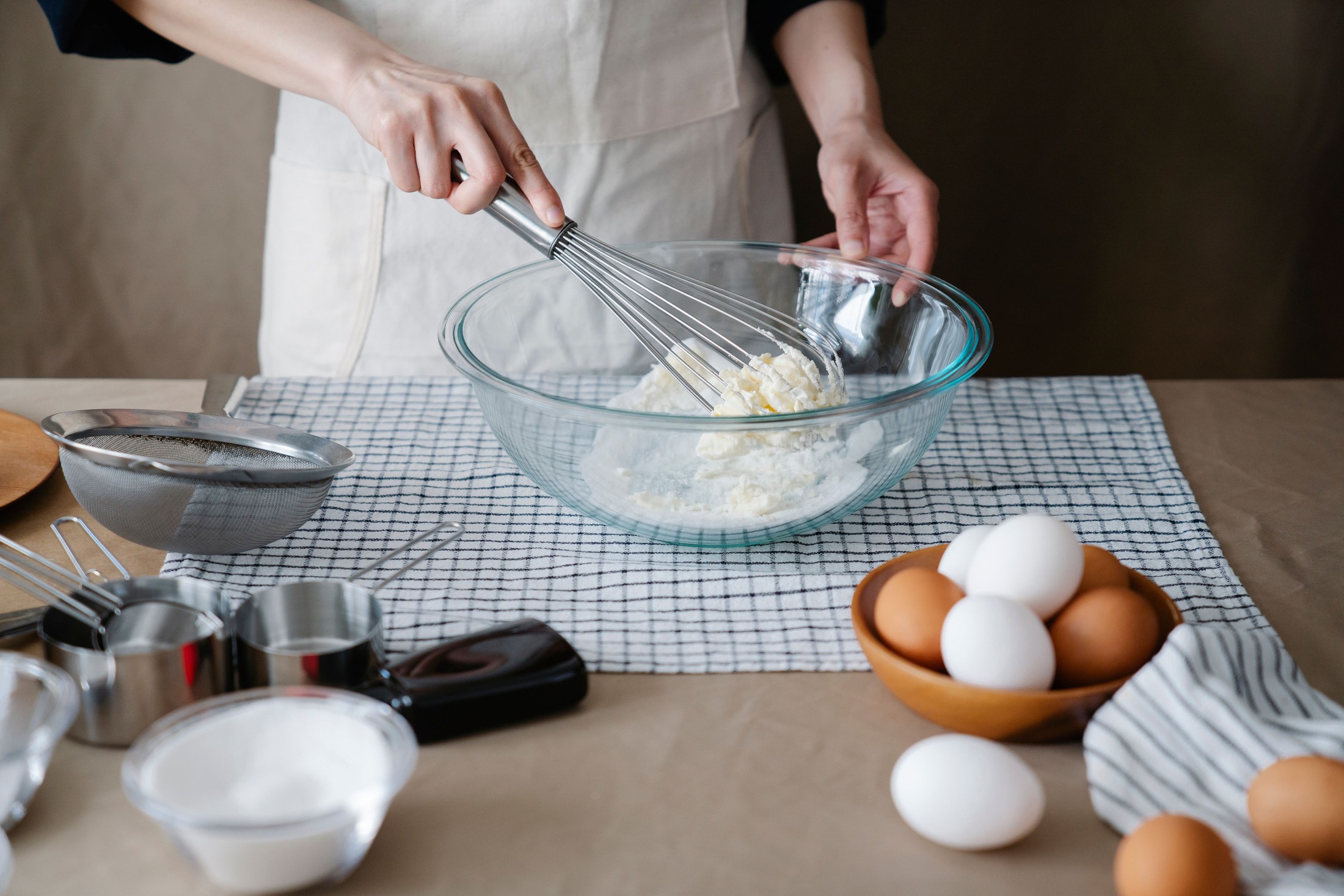
Aeration introduces air into a mixture. During baking, gases expand while starch and proteins help the product set. The final texture depends on the formulation and process together: a photograph of a sunken cake cannot identify one cause on its own.
Describe the observation
Begin with what you can describe accurately. A difference in appearance, texture or timing is an observation to investigate, rather than proof of a single cause. Keep the complete source method and the conditions of the setting available.
Keep the question bounded
A useful learning question identifies what you are trying to understand. Ask which part of the reference may explain the observation and what additional information is needed. Avoid turning an isolated example into a universal explanation.
Troubleshooting through a source record
Separate what you observed from your explanation of it. Record the source method, ingredient information, equipment context and the point where the result differed. Bring that record to the educator rather than treating one photograph as proof of a cause.
Return to the educator
A public article can help organise the discussion. Practical experiments, method changes and the interpretation of results belong within appropriate complete guidance and the responsible learning environment.